Sunday, 6 January 2019

Branding Tips All Entrepreneurs Should Embrace and Use

If you’re wondering how powerful branding is then this will help. Having a strong personal brand can set you apart from your competitors, which means that your brand might determine if you fly high or flunk low. This is because your brand acts as your business representative which shows the customers what they are dealing with and if you are good to deal with firsthand.

Thus, whether you are an aspiring entrepreneur or hustling to level up your business, the following tips will help you gain a lasting momentum in the business world:

1. Focusing on the details

There’s no such thing as a small detail to overlook— your consumers are much more observant than some business owners give them credit for. This is why every little detail should be thought about, like the fonts used in your business sign or logo that needs to match the personality of your brand.

Focusing on details is a vital aspect in establishing your brand because some of your clients may not voice it out as to why your brand identity works or doesn’t, but they can and will notice if it’s right or somewhat off. This simple mistake can undermine your brand and company’s image thus making it look like you are unprofessional or unworthy to work with.

2. Audience

Of course, what will your business be without your consumers, right? Which is why your audience determines your status if you are in control in your niche —not you. Thus, know your customers that consume your products and understand their needs or issues. This way, you’ll be able to create solutions through your products or services.

3. Maximizing social media

Since the 21st century is the digital age, social media is now one of the most efficient ways to market your brands because of its vast reach. Facebook alone has recently surpassed 500 million members. By simply making Facebook one of your social media outlets for your brand, you’ll be able to reach out to at least a number of potential customers.

4. Personal branding

Notice that most of the commercials right now target the feelings of the consumers by having heartfelt advertisements that can sometimes make you shed tears. Now that’s not exaggerating, countless advertisements use words like empowering, moving, inspirational, or uplifting incorporated with their brand to reach out and gain an impact towards the audience.

According to Ms. Jennifer Kem, a branding and marketing expert who helped entrepreneurs like Lisa Nichols and Steve Harvey, “the key to building personal branding is keeping the feelings associated with your product or brand in mind.”

“A brand is the set of expectations, memories, stories and relationships that, taken together, account for a consumer’s decision to choose one product or service over another.” – Seth Godin

Here’s how you can do that:

1. Creating experiences

You need to create an experience for your customers for them to know what your brand is all about.

For example, you are running a startup cafĂ© and want to attract an artsy crowd, then why not have some art contests or some pop-up performances? By doing this, you make your consumers a part of a community or will make them feel like they’re co-creating the establishment of the brand.

2. Creating a sense of belonging

As what was previously stated, making your consumers feel like they are a part of a community will speak volumes towards your brand and products. It is a huge mistake if all you do is just create swag with your logo on it. It’s important to embrace connections and ties with them.

“The key is to set realistic customer expectations, and then not to just meet them, but to exceed them — preferably in unexpected and helpful ways.” – Richard Branson

3. Communication and relationship

Know your consumers more, this is the type of intangible service which plays an important role in making your customers come back for more other than the product or services that you offer. In this way, you are securing ties and establishing the foundation of your branding.

So, how do you do this? Simple. Just act and communicate like a friend by knowing things about your customers, such as email addresses, or connecting through the use of social media to establish your relationship even more.

The key to building a strong and effective brand identity is developing a game plan with clear goals and vision in mind. Do this as early as possible so that you will be in top shape to compete with other competitors in the vast sea of businesses in the market.

Establish clear goals, and you will be positioned in a consistent brand image throughout your marketing platforms.

How do you make sure to create awareness of your business? Share your tips with us below!

Image courtesy of Twenty20.com


from
https://addicted2success.com/entrepreneur-profile/branding-tips-all-entrepreneurs-should-embrace-and-use/

Saturday, 5 January 2019

How a 4-Step Action Memo Can Help You Smash Your Goals in 24 Hours

What is it that keeps you from achieving your goals? Is it a lack of focus? A lack of motivation? A lack of specific strategies to accomplish those goals? Or is a combination of many things? What separates armchair entrepreneurs from true entrepreneurs and business people is the ability to take regular action on top priority goals.

True entrepreneurs have clearly outlined goals which are backed up by principles refined over time. These principles provide them with guidance on what is important. Defining these principles and outlining these long-term goals come easily to some, but for others it can be a huge challenge. Once these long-term goals have been identified, the challenge becomes how best to tackle the day-to-day tasks and actions that are required to turn dreams into reality.

Sometimes, the hardest part of taking action is the planning that goes into it. Big ideas are sexy and exciting, but day-to-day monotonous tasks are rarely as exciting. Armchair entrepreneurs would rather dream big and assume the hard work that goes into day-to-day activities will just take care of itself. While some people choose to dive into the action without thinking, those who want to really make lasting change and reach their goals must plan ahead.

When people think about something they’d like to accomplish, they tend to focus on the first step. Whether it’s a trip they’d like to go on or a skill they’d like to learn, they usually look at the very first thing that needs to happen without considering the longer term implications.

Try creating an Action Memo to help you connect your long term goals with concrete actions and stay motivated even when you struggle to keep moving forward.

Below is a 4-step action memo which can help you smash your goals instantaneously:

1. Purpose

What do you want to accomplish? Provide background on your current plan and why exactly you want to accomplish a certain goal or take a certain action.

As the author and leadership coach Simon Sinek often reminds us, organisations and individuals need to “start with why” to get to the core of why they really want to be in business or why they want to accomplish a certain task. If you think of this as a miniature business plan, the background should be your executive summary. Ask yourself, why do you want to take action NOW?

“It’s not enough to have lived. We should be determined to live for something.” – Winston S. Churchill

2. Actions

Outline specific actions and tasks. Once you’ve described the background, list out the top 3 to 5 actions that each take under 24 hours to accomplish and which will get you closer to achieving your long-term goal.

This is a core part of the Action Memo, because it provides you with a list of actions which will need to be accomplished in the next several days. Make sure you keep these actions small enough that they can be accomplished in a day. For example, rather than say “write an eBook”, break up the larger task into several small sections. In 24 hours you might be able to create a chapter outline for your book, or contract a designer to help you create a cover.

3. Deadlines

Review your timeline. Ask yourself – when will these actions be done? The second most important part of this Action Memo is the timeline, because it helps keep you on task and forces you to think about which tasks need to be accomplished in which order. Without a timeline and specific deadlines, you will lose motivation and will lack the drive to take urgent action.

Urgent action is the name of the game when it comes to creating a habit for taking action. Write down when each action from stage two will be completed, and then try your best to stick to those deadlines.

“We have to live life with a sense of urgency so not a minute is wasted.” – Les Brown

4. Performance & Accountability

How will you measure performance? How will you define success? What does success look like to you in relation to completing these tasks? If you want to write a new business plan, perhaps finishing a 5-page outline is a sufficient indicator of success. If you want to increase sales in a new product, perhaps emailing 10 new clients and asking them to buy your solution is a good success indicator.

Just as you track performance, be sure to keep yourself accountable. One of the best ways to ensure your continued success over time is to keep yourself accountable by working with others who will check in with you and make sure you’re completing your tasks.

I urge you to reach out to someone via email, text or phone and send them your Action Memo with the dates and deadlines in place. Ask them for their support and wait to hear their response. Write a few sentences here about how you will keep yourself accountable and who you will reach out to.

Whether you’re looking to get more done on a current project, or you’re trying to finally get off your butt and start working on your next side project, I would highly recommend writing out an Action Memo as outlined in the stages above. It’s a great way to provide yourself with a concrete action plan which you can keep going back to for motivation and inspiration as you take steps towards your overarching long-term goals.

Which one of these 4 steps do you need to work on the most? Let us know below so we can help you out!

Image courtesy of Twenty20.com


from
https://addicted2success.com/success-advice/how-a-4-step-action-memo-can-help-you-smash-your-goals-in-24-hours/

Friday, 4 January 2019

Time to Shine: Brand Yourself as a Thought Leader in Your Industry

Reputation is everything. In today’s interconnected and information overloaded world, it’s vital to professional success to not only be an expert but to brand yourself as a thought leader in your chosen field. Creating a reputable personal brand takes more than a few tweets. You need to actively engage in industry discussions – not in a promotional way, but in a manner that adds value across multiple platforms. Becoming a reputable thought leader isn’t a quick process, but diligence and engagement can get you there.

Here are a few tips to get you started:

1. Listen to What Others Are Saying

One of the best ways to have something worthwhile to say is to listen to what others in your industry are talking about and form your own opinion on the matter. It won’t always be different, innovative or meaningful, but when you come up with a new perspective on the situation or even an interesting way of digesting and implementing known information, it’ll be worth sharing and worth listening to.

Don’t be afraid to take the position of contrarian or devil’s advocate, as long as you can back up what you’re saying. Innovators always seem crazy until their way of thinking becomes the norm.

Another great tactic is thinking about the challenges the industry is facing and sharing how you are personally overcoming them, even if your approach isn’t 100 percent right just yet. People are looking for a solution to their problems. If you can share your successes and failures and give peers a new approach to think about, you’re automatically setting yourself up to have a loyal following.

Every time you’re at a speaking engagement or networking event, make mental notes of the topics and questions that come up. Forming and sharing well thought out answers to trending industry discussions is what being a thought leader is all about.

“How do you become a thought leader? It starts with BEING a thought leader and then connecting the dots back to you.” – Brian Solis

2. Publish Yourself

Personal-professional blogs are great, but unless you’re a recognized name in the industry, it can be hard to get people to spend precious time on an unproven blog. Keep up your blog if you have one, but take advantage of the fact that LinkedIn opened published posts to everyone.

LinkedIn is the top social business platform and users are typically there to see business-related news, updates and posts. This is a focused, captive audience to start building a following among. Sharing relevant articles that you find interesting is a good way to balance your self-publication.

If you only ever promote your own content you’ll lose credibility. Thought leadership is as much about sharing ideas as it is about coming up with them on your own. Keep your posts (whether on LinkedIn or anywhere else) on topic and in line with your industry. If you deviate too much you’ll lose attention and damage your broader reputation as a focused, interesting thought leader.

3. Get Published

Take the next step in online publications and apply to be a contributor to a popular industry or business news site. If your industry is still heavily print-based, look into submitting an article or opinion piece to industry magazines.

Getting professionally published isn’t as hard as you might think. Many contributor-based websites either have an application form to be an approved writer or guidelines alongside an article submission form for a DIY approach.

When one of your pieces is published, share it to your social networks for extra reach. Keep an eye on the social share counters many media sites have on articles so you can tell which topics, formats and headlines resonate most with readers.

4. Start Speaking

Start sharing your thoughts in person by reaching out to regional groups about potential speaking opportunities. Regional professional groups, industry organizations, even the chamber of commerce will get you used to sharing your ideas with a live audience and help you network while you confidently position yourself as a thought leader and area expert. Even speaking with local student groups is a good way to spread your influence.

Apply to be a local TEDx speaker. These events are typically well attended by curious people who are eager to share what they’ve learned and tweet about your talk. If you’re scheduled to appear, let your local colleagues know you’ll be speaking so they can help spread the word and attend themselves.

As your name gets better known, set your sights on industry conferences. Annual conferences are beacons of excitement and knowledge in any industry – a chance to hear from top personals and sit in on workshops and panels that will provide valuable takeaways. Get in on the action by applying to be a panel member or moderate a discussion. Once your name starts rising to the top of the industry, you may even find yourself becoming a sought-after keynote speaker.

5. Network

Formal publication and speaking are important factors of becoming a top thought leader, but simply getting out there and sharing your ideas with others in your field is just as helpful. Go to meet-ups, happy hours, anywhere really that people are gathering and sharing ideas. The entire purpose of professional networking is to meet people, make impressions and share ideas. So get out there and make your name the one everyone knows before they even shake your hand.

Whenever you’re at a conference or large industry event make mental notes for follow up articles and live tweet nuggets of insight from the event (be sure to drop in a thought or two of your own). Using the conference hashtag can gain you a lot of followers.

“Part of the role of a thought leader is not to necessarily have all the answers but it’s to be able to ask the right questions and the privilege of being able to lead the conversation.” – Michael Hyatt

6. Make it Memorable

No matter where you’re writing or speaking, if what you’re saying isn’t noteworthy and memorable it’s not going to be talked about, shared or give you a reputation as a true innovative thought leader. If people aren’t taking notes or tweeting, you’re doing it wrong.

Make sure what you’re saying is different enough that people want to stop and listen. To be a thought leader in a particular industry, you have to impress other experts in your industry – meaning you have to know what you’re talking about. Parroting the same tired information, techniques, pointers and thoughts won’t make you stand out or help your personal brand. Including an easily shareable (meaning under 140 characters) sound bite in your articles or speeches will help capture attention and spread your thoughts.

7. Be Patient and Persistent

If being a thought leader were easy, every working and retired professional would be on an equal playing field. To ensure you stay on top, take your time, think about the information and thoughts you’re putting out there and make sure they align with the personal brand you’re trying to build. If you share and produce enough thought-provoking and insightful information, your reputation will begin to climb.

What are some things you do to help become an industry expert? Comment below!

Image courtesy of Twenty20.com


from
https://addicted2success.com/entrepreneur-profile/time-to-shine-brand-yourself-as-a-thought-leader-in-your-industry/

Thursday, 3 January 2019

Facebook Ad Do’s and Don’ts: The Psychology Vs. Mechanics

The mechanics of Facebook Advertising are forever changing. As the platform grows and expands, new algorithms are created. These algorithms affect which kind of content you see in the newsfeed and elsewhere. Keeping up with the ever-changing mechanics is difficult and not the strategy you want to perfect if you wish to be an effective Facebook Advertiser.

Instead of getting lost in the latest mechanics, focus your time on becoming an expert at the PSYCHOLOGY of advertising. If you can understand the psychology behind what you are doing then you will be most effective. You can learn all the mechanics in the world – ad sets, targeting, Facebook pixels, lookalike audience, retargeting, etc. But all of this knowledge will be in vain if you do not understand the psychology behind what you are doing.

Society as a whole has been conditioned with this mentality of a “quick fix” or this “one thing” that will be their salvation, guide or hack to having success. This could not be further from the truth. The truth is, in order to be successful there needs to be a combination of very specific ingredients, similar to a recipe.

“One of the biggest mindset shifts is realizing that there is no “hack” that can fix everything for you at once and you need to stop thinking this way.”

Proper Facebook Advertising is a system. This is a complex symphony of all different things working in unison. Just one wrong thing can make the whole thing fail. The mechanics is not what’s going to make or break you, it’s the fundamentals.

Taking time to understand the psychology behind advertising is the best use of your time. You must be able to put yourself in the shoes of your target customer. You can have all the mechanics in the world, but if your ad does not speak directly to your consumer, then it will be ineffective and not profitable.

Never forget that we are working with people, not just numbers. They have dreams, aspirations, fears, etc. At the end of the day, building a true connection with these people is what creates success.

I had the opportunity to sit down and speak with Peter Szabo, a rising millennial leader and marketer who has spent over $10,000,000 dollars in Facebook Advertising for his clients, generating millions of dollars in revenue for them. He broke down the importance of understanding the Psychology of advertising in order to achieve the results that you desire.

Here are the 8 Psychology Principles that Peter says you must be aware of when creating ANY Facebook Advertisement:

  1. Open with YES driven questions. Get people saying “yes, yes” early on in your ad. You want your audience to agree with you so that they relate to the ad and stay engaged.
  2. Introduce yourself. Be personable. Share the patterns you learn. “In this video below I share XYZ, check it out and let me know what you think.”
  3. Consistency bias. Staying consistent is hard for most people. This is why we pay attention to people that are consistent, because there are not many. You want your audience to see you consistently so that you occupy mental real estate. Attention is the name of the game and if you are consistent than you will be gaining more attention than your competitors.
  4. Connect on an emotional level. If you don’t hit the nerve and connect with your people through copywriting/video/image then the ad will not work. You can have perfect mechanics but what’s the point if people do not resonate with your ad. People are driven by pain, pleasure, and emotion.
  5. Subtle positioning to build authority in the end. Share your achievements. You must edify yourself and show that you are credible. People trust authority figures who know what they are talking about and whom have a track record of success that they can readily show through case studies and testimonials.
  6. Manage ads with logic, not emotion. Advertising is a very left brain thing. It’s pure logic and emotion should not play a role here. Keep emotions for other things. Look at the numbers and make decisions accordingly.
  7. Make sure you include a call to action. People miss subtleties so they must be told what they need to do next.
  8. Lastly, get a coach/mentor. This piece of advice will saves you THOUSANDS of dollars, even if you have to pay this person a couple thousand to teach you it’s worth it. FB ads are very complex and require time, effort, and money into learning before you’re even a practitioner. Leverage the fact that these experts have already invested the time and money and therefore they know things that you do not. In just 10 minutes on screenshare, a mentor can point out mistakes that would take you 10 days to figure out. Why waste your time, energy, and money figuring out mistakes by trial and error when you can simply pay someone to save you from that mistake?

“Ads and mechanics are just 10% of the equation. 90% is branding, funnel, system, team, content and psychology.” – Peter Szabo

Set clear expectations for yourself and be realistic – things will not happen overnight. The reality is that initially you’ll probably lose some money and it’s going to suck, but you have to get through it. It is important to set the expectation that this will be a process.

In conclusion, if you spend your time learning and focusing on the fundamentals of the psychology of advertising then you will put yourself in a great position to succeed no matter what industry you are in. You can always learn more mechanics, however the real winning comes when you have a strong foundation of fundamentals that you can leverage to create ads that resonate with your audience and strike a nerve with your consumer. Having the proper psychology pays the bills, the mechanics are there for you to fine tune your approach.


from
https://addicted2success.com/startups/facebook-ad-dos-and-donts-the-psychology-vs-mechanics/

Wednesday, 2 January 2019

3 Ways to Adjust Your Routines and Upgrade Your Mindset

Life can become quite boring, if you let it. All of your life, you’ve been doing things the same way. A routine has been established and it makes the day easier when you just follow it. Day in and day out, it’s the same thing. After a while, you aren’t being challenged. Your mind slowly becomes sluggish because you haven’t done anything to stimulate it. You’re living your life on autopilot and that’s not good.

Having a constructive routine is good, because it helps with productivity. It prevents you from having to waste time and energy on small decisions and pushes the day forward. Certain routines can also suck the life out of you. Eating the same thing at the same restaurant, going the same way to work everyday and doing the same thing every weekend are examples of dull routines.

Actually, you can change that monotonous routine. It doesn’t have to be a huge change, but little changes will do. The little changes will be enough to get you started. In order to break a boring set of habits, you must stretch yourself and do something different. This not only sparks your mind into thinking, but it gives you something more to look forward to throughout your day.

Here are 3 things you can do right now to change up that monotonous routine:

1. Try talking to different people

When you engage with different people, it forces you to think outside the norm and learn something new. Instead of having the same conversations with the same people, immerse yourself in an environment that encourages you to think and respond, accordingly. Participating in communications with a new crowd gives you another level of interest. It’s not better or worse than your usual crowd, but it adds a new layer of engagement that you’re not used to.

“You’ll never change your life until you change something you do daily. The secret of your success s found in your daily routine.” – John C. Maxwell

2. Watch something else on TV or listen to something different

Your mind is unable to learn if you’re stuck on the same TV channel or radio station all the time. Watch another TV show or listen to a podcast, as opposed to the radio. It’s guaranteed that you’ll pick up something you didn’t know before.

Your eyes and ears are overloaded with images and sounds everyday. Why not look at or listen to something other than what you’re used to? If you’ve never watched a football game, see if you can catch on and follow the rules of the game. If you’ve never listened to classical music, see how many instruments you can identify. Challenge yourself and open your world to something new.

3. Believe in yourself

Just because you do the same thing everyday doesn’t mean you can’t change and do something else. The downside to getting used to a routine, is that you slowly forget how to think for yourself. Without noticing, you’ll begin to unconsciously look for someone else’s directions to follow. Your mind wants someone or something to give it instructions.  

Slipping into this nonproductive void can be dangerous. Not only will you begin to do what other people tell you to do, but eventually, you’ll lose control of your life, because it’s being dominated by someone else. Believe in yourself and know that you can change and adjust your thoughts to your liking and enjoyment.

Set your standards high. Don’t be afraid to do things that you wouldn’t normally do. Explore things on another level and see how you like it. Plan to go after the goals you think you’re unable to reach. You’ll begin to realize that if you stretch yourself and make the attempt, it is very possible to achieve them.

When you upgrade your mindset, the impossible becomes possible. We’re so used to others molding our minds and telling us what to believe, sometimes, we forget to listen to our own inner voice. We forget that we have the power to become just as great as anyone else. The potential is there, we just have to remember that it’s there and be ready to grow.

“The less routine, the more life.” – Amos Bronson Alcott

Upgrading your mindset is not a simple thing to do. It’s easier to NOT upgrade it, but that’s not beneficial to you. Placing yourself within various groups of people, environments and thought patterns will prevent boredom and it is more gratifying.

Doing these tasks won’t be easy. It will take time to start because, more than likely, you’ll face a great amount of resistance. Your mind will tell you that nothing needs to change or it’s too hard to do. Remember, your objective is to break that dull, day in and day out routine of your life. It is easier to sit back and let things go as they always do, but also keep in mind that you won’t experience any growth that way.

Improve your life today by upgrading your mindset. Become the focused, disciplined and productive person you want to be. Everything begins within the mind, so lead yourself to a more rewarding and fulfilling life!

Image courtesy of Twenty20.com


from
https://addicted2success.com/life/3-ways-to-adjust-your-routines-and-upgrade-your-mindset/

Tuesday, 1 January 2019

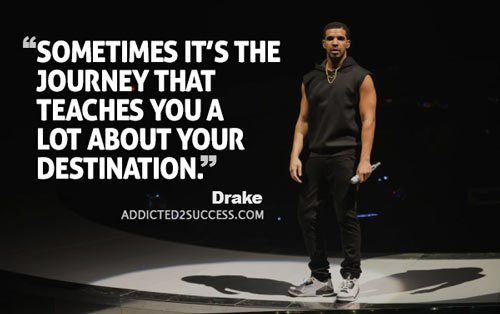
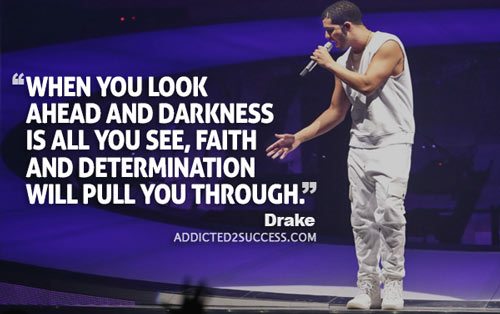
38 of Drake’s Most Memorable Motivational Quotes

Drake is arguably one of the best artists in music today. What a lot of people don’t know about him is his extreme motivation to reach a certain level of success, not just in music, but also in life and other business ventures he is involved in.

In 2013, Drake was announced as the Global Ambassador for the Toronto Raptors,  a professional basketball team. He has said on record many times how he is addicted to success and wants to be number 1. With the determination that he has, he is well on his way to be one of the most successful rappers in history.

Here are 38 of Drake’s most memorable quotes and lyrics:

1. “Never let success get to your head and never let failure get to your heart.”

2. “Kill them with success and bury them with a smile.”

3. “Haters will broadcast your failures, but whisper your success.”

4. “People will wish you all the success in the world and then hate you when you get it.”


Drake quotes
 

6. “Judge me, and you’ll have no time left to love me.”

7. “It’s never too late to realize what you want in your life and it’s never wrong to fight for it.”

8. “You know its real when you are who you think you are”

9. “Smile and let everyone know that today, you’re a lot stronger than you were yesterday.”

10. “Strength isn’t always shown in what you can hold on to, sometimes it’s shown in what you can let go of.”

11. “I’m not confrontational, but if someone challenges, I’m not going to back down.”

12. “Always felt like my vision been bigger than the bigger picture.”

13. “Everybody dies but not everybody lives.”

14. “The moment I stop having fun with it, I’ll be done with it.”


Drake quotes
 

16. “Know life is just a game in which the cards are facing down. I’m in the world where things are taken, never given how long they choose to love you will never be your decision.”

17. “I was born to make mistakes, not to fake perfection.”

18. “Life can always change, you have to adjust”

19. “Pain makes you stronger. Fear makes you braver. Heartbreak makes you wiser.”

20. “Count your blessings, not problems.”

21. “Everybody has an addiction, mine happens to be success.”

22. “I’m trying to do better than good enough.”

23. “Before you give up, think of the reason you held on so long.”

24. “When writing the story of your life, don’t let anyone else hold the pen.”

25. “I’m not confrontational but if someone challengesme I’m not going to back down.”

26. “My life is mine to remember.”

27. “The ideal girl is driven, working on something other than modeling or being a singer.”

28. “When I think of myself, I think of Toronto. My music would never sound the way it does if it weren’t for Toronto.”

29. “People like to build their own story about my life. I don’t know if it makes them feel better, or if it makes it okay for them to not like me, but the last thing I grew up as was rich.”

30. “Perfection’ to me is, I walk away from a situation and say, ‘I did everything I could do right there.”

31. “I’d rather tell you how I really feel.”

32. “I have an urge to communicate.”

33. “I push myself in a lot of aspects.”

34. “Accept yourself. You don’t have to prove anything to no one except yourself.”

35. “I’m trying to better than good enough.”

36. “Careful what you wish for, you just might get it all.”

37. “I sit and eat with some of the hardest working people in the business. And I observe and I try to apply it to my own craft.


Drake quotes

On or off this list, what is your favorite Drake lyric or quote? Leave your response in the comment section below!


from
https://addicted2success.com/quotes/38-of-drakes-most-memorable-motivational-quotes/

Morning Routines Of 7 Successful Entrepreneurs

We’re often told that it’s only the end result that matters in business and in life. However, if you want to be a successful entrepreneur, you can’t think like this. The way you start matters as much as the way you finish a task. Ask any successful entrepreneur and they will confirm that none of them were born successful. In fact, all of them had to work their way up. Very few, if any, got there by luck.

It’s the choices they made that brought them that far up the ladder. If you want to become like the best, learn from the best. Yes, it’s clichĂ©, but it’s absolutely true. To become successful in your business, you need to start out strong. A morning routine directs the general outcome of your day. Do you have one?

Below are examples of how 7 successful entrepreneurs start their days, and how they can benefit you:

1. Naveen Jain

The former founder and CEO of InfoSpace is a successful and innovative entrepreneur. Every morning has to start with him taking care of his mind, body, and soul. Why? Because he believes that business is like war, and if your mind, body, and soul are not ready, you’ll lose that battle.

He wakes up between 4:30AM and 5:00AM. The first 15 minutes of the day are focused on taking care of his mind – by catching up on the news, emails, and blogs. He then works out to take care of his body and meditates to take care of his soul.

When asked what he thinks makes a successful person, his answer is simple. “They go out and solve big problems.” If you want to know how to make a billion dollars, solve a 10 billion dollar problem.

2. Oprah Winfrey

Renowned for her Oprah Winfrey Show and journalistic reporting, Oprah is an entrepreneurial icon and a role model for many young women. If you struggle to wake up after the alarm has rung for the third or maybe fourth time, Oprah has a solution: no alarm clock to wake her up!

She lets herself wake up naturally around 6:00 AM and starts her day by expressing her gratitude. As she says, “The key to realizing a dream is to focus not on success but on significance and then even the small steps and little victories along your path will take on greater meaning.”

At 8:00 AM, Oprah brushes her teeth and then walks her five dogs. She comes back to enjoy her favorite cup of espresso before engaging in 30 minutes of meditation. 9 to 10 AM is usually her workout time, after which it allows for the beginning of her day.

3. Warren Buffett

Warren is the chairman and CEO of Berkshire Hathaway. This ‘Oracle’ of Omaha has continued to rank high on the list of top billionaires. Though he is one of the world’s most successful investors, his lifestyle remains very simple.

He wakes up at 6:45 AM, and will spend 80% of his time during the day reading. When asked how to get smart, he said that one should read 500 pages each day to build up their knowledge. At 88 years old, he still finds time to exercise, as well as enjoy the little things, like eating at Mcdonald’s. Despite his financial success, he still takes time to appreciate simplicity.

“I tell college students, when you get to be my age you will be successful if the people who you hope to have love you, do love you.” – Warren Buffett

4. Renee Fishman

As an Ivy League graduate, former lawyer, and real estate mogul turned life coach, Renee has a lot of life experience. Her success hinges on her ability to think outside the box and take risks, so it makes sense that she needs something consistent. This is where a defined routine comes in!

The first thing she will do when she wakes up is to take care of her body. Without checking her emails, touching her phone or reading a book, she will head out to the gym. The workout will last between 15 minutes to 3 hours, but mostly lasts 60 to 90 minutes.

After the gym, Renee will take time to meditate, which she incorporates into her fitness routine. Regardless of where she is, these two activities are a must do every day. When back in her apartment, she will turn all audio or video devices off as she goes through her morning routine. This is the time when she will think about the day and analyze and strategize about things she may be battling with.

5. David Karp

As the founder and former CEO of Tumblr, David Karp is a successful entrepreneur and web developer. While he believes that schedules and “appointments are caustic to creativity,” he does keep it consistent in the morning. He walks to work, enjoys a small office environment, and makes sure to set time aside to check emails, rather than look at them at home.

By making sure he has a definite balance between work and home, he can focus on the tasks at hand with high focus, rather than being distracted and constantly thinking about work.

6. Tony Robbins

With his extremely busy lifestyle traveling all over the world, this life coach, author, philanthropist, and successful entrepreneur has maintained his morning routine. A high level of self-discipline has kept him consistent.

For over 10 years, he starts his day with 10 minutes of meditation which he breaks down as below.

  • 1 minute to perform 3 sets of 30 quick successive breaths (breathing exercise)
  • 3 minutes engaging in slow breathing to reflect on things he is grateful for
  • 3 minutes to create and experience a connection between his head and the rest of the body
  • 3 minutes to focus and imagine on what it would feel like to accomplish three of his goals.

Then, he follows a rigorous 15 minute work out before starting his day.

“I challenge you to make your life a masterpiece. I challenge you to join the ranks of those people who live what they teach, who walk their talk.” – Tony Robbins

7. John Paul Dejoria

This once homeless man and now billionaire takes the first five minutes of his morning reflecting and being grateful for what he has. He says it gives him his everyday energy boost. Then he makes a cup of coffee or cappuccino before calling his assistants and checking his agendas and calendars.

He admits to sticking to his old-school way where he never uses email, does not text, or even use a computer. All his communication is done via calls or fax, which he says helps him center his attention to the most crucial things that require his attention.

Conclusion

What can you, as an entrepreneur, take away from all of these morning routines? All of these icons prioritize their mental and physical health. Meditation and working out are crucial in establishing a strong start to the day. Taking time to appreciate your achievements and focus on your goals is another key factor.

Another important point is that these entrepreneurs will stick to their routine no matter where they are. They understand why they do what they do. Their self-discipline and self-respect set the tone for the rest of their day, and their overall success.

Start small and make some changes in your daily activity. You might be surprised at the influence it has over the rest of your day and your business.

Which one of these successful entrepreneurs morning routines resonated most with you and why? Let us know your thoughts below!


from
https://addicted2success.com/success-advice/morning-routines-of-7-successful-entrepreneurs/