Friday, 9 March 2018

22 Fascinating Christopher Nolan Quotes

Christopher Nolan is an innovative movie writer-director who has made a few early 21st century biggest hits like Memento, Inception, The Dark Knight, The Dark Knight Rises, Interstellar, and Dunkirk. I believe he is the best director currently working in Hollywood. I’ve gathered these great Christoper Nolan quotes so you can see the mind of a genius […]

The post 22 Fascinating Christopher Nolan Quotes appeared first on MotivationGrid.


from
https://motivationgrid.com/22-fascinating-christopher-nolan-quotes/

Thursday, 8 March 2018

How You Can Develop the Charisma of Elon Musk

Think about the space industry for a second; one of the world’s most expensive, complex, and bureaucratic industries you can find. Now, imagine one day a software wiz kid decides he wants to start building rockets and compete against large competitors such as Boeing and Lockheed Martin. Although he had no experience in the space industry, after 15 years and billions of dollars spent, this entrepreneur succeeds on disrupting the whole industry, defeating its competitors along the way.

As you can imagine by now, the entrepreneur I’m talking about is Elon Musk. Not only has he disrupted the space industry, but he also changed the financial industry with PayPal, the automobile industry with Tesla Inc., and the renewable energy industry with SolarCity. If there’s one common attribute among all Elon Musk’s successes it’s his charisma.

If you see Elon Musk and wish you had his charismatic personality, don’t despair. Elon Musk wasn’t born charismatic. All you need is learn how to develop your charisma, just like Elon Musk did.

Hit the right level of charisma

When Elon Musk speaks at a press conference, he’s far from looking like Steve Jobs, the classic example of a charismatic CEO. He talks like a normal person would. It turns out having moderate levels of charisma, like Elon, is a good thing. According to a study from Ghent University, it’s more important for CEOs to have a “good enough” level of charisma that fits their personalities best than trying to force looking charismatic.

Researchers measured different charismatic personality traits using 56 questions from the Hogan Development Survey. Researchers then compared the scores from 600 business leaders with their effectiveness rated by their superiors, peers, and subordinates.

They found charisma has diminishing marginal returns; as charisma increased, so did perceived effectiveness, but only up to a point. After a certain point, as charisma scores continued to increase, perceived effectiveness started to decline. “Leaders with both low and high charismatic personalities were perceived as being less effective than leaders with moderate levels of charisma,” said Filip De Fruyt Ph.D., one of the co-authors of the study.

The less charismatic leaders ended up being seen as less effective due to lacking in the vision and strategy, while the more charismatic ones were scored lower due to their weakness in operations. Having a good mix of both vision and execution, as seen in moderately charismatic leaders, seems to be one of the secrets behind Elon’s success.

“You want to have a future where you’re expecting things to be better, not one where you’re expecting things to be worse.” – Elon Musk

Have a presence

One common element among all charismatic CEOs is their presence. According to Amy Cuddy, Harvard psychologist and author of the book by the same name, presence is “the state of being attuned to and able to comfortably express our true thoughts, feelings, values and potential.” Presence is “confidence without arrogance.” It is all about being in the moment.

Olivia Fox Cabane, author of The Charisma Myth, considers Elon Musk as a prime example of someone who has mastered the art of charismatic presence. Despite the fact he’s naturally introverted, he can show high levels of intense focus and presence when he speaks. When he speaks to someone, he gives his full attention to a few people, which makes people feel like they are special. Other charismatic leaders that were famous for their intense focus were Bill Clinton and John F. Kennedy.

To develop presence, Cuddy recommends two exercises. The first one is called “power posing,” which consists on adopting the body language of other powerful people, so you feel and act more confident. The second one, self-affirmation, consists on writing down your core values and why they’re meaningful to you.

Have conviction

Take a look at the life of Elon Musk, and you will see in each of his successes he had to overcome a myriad of nerve-wracking challenges. His challenges include avoiding a near bankruptcy by a matter of days and building two separate companies while going through a messy public divorce with his first wife, Justine.

Antonio Gracias, an investor in both Tesla and SpaceX, said Elon Musk: “has the ability to work harder and endure more stress than anyone I’ve ever met. The harder it gets, the better he gets.” After all his setbacks and mistakes, Tesla is valued at over $56 billion, whereas SpaceX is valued at $21 billion.

The only way he was able to keep his companies afloat was his conviction. According to Charlie Houpert, author of Charisma on Command, “conviction is the heart of charisma. It is the belief that things will work out. It’s the belief that somehow, someway your goals will be achieved. It’s being sure of yourself in the face of the unknown“.

“When something is important enough, you do it even if the odds are not in your favor.” – Elon Musk

The only way you can build conviction like Elon Musk is by believing in yourself regardless of what other people think. Build conviction in everything you do and people will follow you.

Developing charisma is like learning a skill because there are no shortcuts and it takes time. With the right attitude, which includes patience and perseverance, it can be developed. Elon Musk was able to develop his charisma just like he was able to build his company, step by step, mistake after mistake. Follow his steps, and you will be able to develop charisma to become a more effective leader in your own life.

What do you like most about Elon Musk? Share with us in the comments below!


from
https://addicted2success.com/success-advice/how-you-can-develop-the-charisma-of-elon-musk/

5 Simple Ways Anyone Can Hack Resilience

Anytime we suffer a gut punch, it’s easy to lose track of the goal and zero in on what went wrong, “why me” thinking, and everything we’ve lost along the way. To bounce back, we have to change our mindset from “shoulda, coulda, woulda” to one that is forward-focused.

These five hacks below can help you achieve that elusive quality called resilience:

1. Be grateful

When you shift your perspective, you completely change your experience of the world around you. No matter what your situation, your mindset will always shape your reality. We all have challenges but if you look around, you can usually find someone who is dealing with challenges worse than your own. So to begin, we can be grateful for our challenges – they are teaching us how to deal with adversity, they are making us stronger, and in most cases they could be worse than they are.

Start by asking yourself, “In this moment, what am I grateful for?” Depending on your circumstances, your first response might be, “nothing.” If that’s the case, start with the smallest most basic thing you can think of and go from there. Recognizing your circumstances are fluid and identifying what you already appreciate creates a mindset for abundance. Being grateful for what you already have is the first step to hacking resilience because it allows you to open yourself up to receive even more.

2. Head butt adversity

Resilience isn’t just our capacity to stand there and take the slings and arrows of life, it’s the power and agility in which we respond. It turns out, we don’t have a limited amount of resilience and that’s good news because when bad things happen, over and over, layered on top of each other, our resilience doesn’t have to tap out.

We can build unlimited strength, agility, and speed in our response by learning to effectively “bounce,” and we can do that even before adversity hits. A situation only has the meaning you give it. You get to decide if it is something that will stop you in your tracks or if you will frame it as a challenge that offers a opportunity to learn and grow.

For every negative or difficult event that happens to you today, reframe the meaning you give it in your life. The circumstance itself has no power over you, but your response to it does. When a difficult situation arises, ask yourself these two questions: How could this be an opportunity in disguise and what does this make possible?

See yourself as the one in charge of your own fate, and seize that opportunity. Even in the difficult moments, by deliberately choosing the meaning you give to those moments and the power they have over you, you can build resilience and thrive.

“Do not judge me by my success, judge me by how many times I fell down and got back up again.” – Ernest Hemingway

3. Cut yourself some slack

We get discouraged about our life when we compare it to others, something that has become especially toxic in the age of social media. What people post on Facebook is their “highlight reel.” The rest of their life is pretty ordinary so if you’re comparing the totality of your life with the highlight reel of others, you’re bound to feel a little alone and discouraged when bad things happen.

The truth is, we all have setbacks. Every single one of us with no exception. Allow yourself a little breathing room when adversity hits. Breathe deeply as often as possible, and give yourself a little time to catch your breath, lick your wounds, and come back swinging.

4. Discover the lesson

Everything that happens in our life is an opportunity for growth. If we allow every life event to shape us in a positive way, we will gain something, even from circumstances that seem to have no redeeming qualities whatsoever.

Viktor Frankl was a Swiss psychiatrist who watched many of his fellow prisoners in Auschwitz commit suicide after losing their entire families to genocide. He too had lost his family and even contemplated suicide until one day he had a vision of himself on stage, speaking about how he survived, and he knew he still had something left to do. It gave him hope and the will to live, to survive and thrive, and discover meaning in the moment.

When we frame adversity as an opportunity to learn something about ourselves, it gives meaning to the suffering. This allows us to see put the suffering in context and no longer feel that our challenges are pointless.

“When we are no longer able to change a situation – we are challenged to change ourselves.” – Viktor E. Frankl

5. See the opportunities

A family member’s protracted illness may bring other family members closer as they team up to take care of their loved ones. Being let go from a mediocre job may lead to an opportunity you never would have seen if you were still working.

When bad things happen, we tend to assume that everything about the circumstance is negative. But this isn’t really true. No matter how terrible things have become, there is always something good that will come out of something bad. Always. The problem is we don’t usually see it in the moment, because we’re just not looking for it.

For every negative event you experience, the sooner you choose to seek and embrace the good that could come out of it, the quicker you will move forward and experience the resilience you never thought possible.

What do you do in order to overcome the struggles in your life? Let us know in the comments below!


from
https://addicted2success.com/life/5-simple-ways-anyone-can-hack-resilience/

Your Mentors Won’t Last Forever: They Come And Go.

I wanted to say a little something about mentors. I think many people have forgotten a few details.

Let’s start with this: Mentors come into your life when you least expect and they leave in the same way. Most mentors do not stay in your life forever.

Over the last five years, I’ve had many, but six of them stick out. They are Andrew, Ben, David, Walter, Shannon and Karl.

Each of these mentors came into my life during a time when I thought I was hopeless or didn’t know what was next. Right now, in my career, I’ve reached that familiar crossroad again. The existing line-up of mentors have no answers.

That’s when I realized once again that mentors don’t last forever.

As you get to the various levels of life, you need different mentors, and mentors that are consistently playing several levels above you.


Why are mentors important?

They help you get out of rock-bottom, they challenge you, they tell you what you don’t want to hear, they give you suggestions, and sometimes, they even give you opportunities.

The crux of a mentor is to be an advisor. They don’t make the decision for you though and often they have more questions than answers.

Many people have reached out to me to be their mentor and thought that somehow, I would have lots of answers for them.

The truth is I don’t have many answers but what I do have is some powerful questions.


How will you know a mentor has arrived on the scene?

Mentors are leaders looking to create more leaders.

Not everyone fits this description. Mentors give without necessarily expecting much in return. Their return is seeing you grow, which often helps them grow. Said another way, mentors grow through you and your progress in life.


That doesn’t mean that mentorship is a one-way street.

“Many people think that a mentor is your free servant to push around and drain with 101 questions”

This idea is wrong. Mentors owe you nothing and a one-way relationship leads to Nowhereville.

With my mentors, I always try to find some way I can add value back to their life. It may not be in the same proportion to what they’ve done for me, but it’s not a competition to see who has the bigger you-know-what.

Going into a mentorship relationship with a mutual value mindset (geez that’s a fancy sounding phrase Tim!) is how you make sure you don’t burn mentors.


Just because someone has answers today, doesn’t mean they will tomorrow.

There are times when my mentors are all out of advice or they repeat the same advice over and over which I’ve already heard. That’s one of the reasons why mentors don’t last forever.

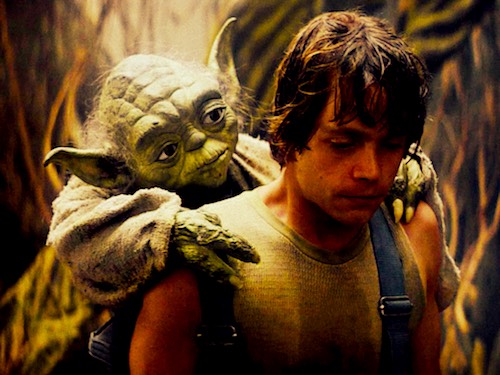
“There’s no one Yoda Mentor that will guide you for the rest of your life and career”

Mentors need to come and go based on where you are today and where you’re going.


Don’t be afraid to move a mentor on.

Sometimes it’s best to own up to the fact that regular chats with a mentor may no longer be valuable. It’s okay to thank someone for their time and move them on.

You’re in charge of your life and career remember? As long as you start with respect and end in gratitude – that applies to everything in life – you’ll never burn a mentor or another human being for that matter.


And what about you young mentee?

That’s right – when are you going to return the gift of mentorship?

This is the question I’ve asked myself recently. Mentors have been great to me and you have to return the favor. We all have hidden value and wisdom inside of us, and it’s a crime not to let it out through 1-1 mentorship.


Actually, nothing lasts forever.

Mentors are not the only thing that won’t last forever. Everything you’ve ever known won’t last forever. So, let’s not dwell on what was, what is, or what could have been.

Mentors will come and go and that’s a good thing.

If you want to increase your productivity and learn some more valuable life hacks, then join my private mailing list on timdenning.net


from
https://addicted2success.com/success-advice/your-mentors-wont-last-forever-they-come-and-go/

Wednesday, 7 March 2018

Management vs. Leadership – Same Jungle, Different Rules

Imagine you’re a part of a filming team and you want to do a movie shot deep in the Amazonian rainforest. You need a specific waterfall shot under the moonlight which occurs only once every 4 years. So you recruit the best directors, field operatives, foot guides (for the jungle marsh), producers and more. Everything that you need to go through the jungle and shoot the movie.

These guys go through the jungle effectively. They cut down all the trees and marsh on the way, prepare food, water, and medicine. They are fast, create the right path and move through the jungle under all the rules and regulations. That is what they were trained for and they conquer the jungle.

The team and you come to the right spot to shoot the scene with the waterfall but it isn’t there. And just then, you hear the guy from the top of a tree yelling at you for the past 3 days “Wrong jungle!”

Efficient and Effective. What does it have to do with leadership and management?

The 2 intersecting fields, often confused and misdefined, have been the cornerstone of today’s economy and entrepreneurship. For years, it was all about management but then leadership kicked in. Everyone started praising Steve Jobs, Elon Musk, and Jack Ma for their vision, implying that is was all about leadership. But management and leadership are just different sides of the same coin.

Management is all about playing the field and being the most efficient you can be. This is where you ask the bottom-line question “How can I best accomplish certain things?” And you need this if you want to succeed. But with no direction, even the most efficient teams will fail like we have seen with the filming crew.

“A leader is one who knows the way, goes the way, and shows the way.” – John Maxwell

This is where leadership comes into the play. Leadership is all about seeing the bigger picture and having a holistic approach to the matter. As a leader, you decide which is the right jungle to fight in. You see which is the right jungle for your guys and decide on the direction your team is heading for.

Leadership is all about being effective (doing the right things). This is where you ask the top-line question “What are the things I want to accomplish?” But even the best leaders, the biggest visionaries are worthless without the right team on the field which creates a reality from that vision. You need both management (doing things right) and leadership (doing the right things).

But people often go into extremes of one and ignore the other which leads to a catastrophe (Enron, Blockbuster, Polaroid etc.). So let’s see what that looks like and how, if you find yourself in that position, you can fix it.

The Lone Visionary

We see this quite often, especially in today’s world where the disruption of big companies by “garage“ companies and one-man shows is a rule instead of a mere coincidence. Lone visionaries have the idea. They see the world not as it is, but as it can be. They have big ideas where some of those can disrupt the industries, turning them upside down and with it, the world.

But the problem with lone visionaries is in the first word, they are (a)lone. A mere vision, or knowing which jungle is worth taking on, is only half of the equation. Without the right team on the field and proper management, the vision will remain just that, a vision.

Convincing other people that your vision is possible, that it will change the world and that people will never look at that the same, is what differentiates the lone visionaries from the best leaders in the world.

“A great person attracts great people and knows how to hold them together.” – Johann Wolfgang Von Goethe

“Do you want to spend the rest of your life selling sugared water or do you want a chance to change the world?“, is what Steve Jobs asked the CEO of PepsiCo, John Sculley at their meeting. And that sentence became the reason why Sculley went from a secure and highly paid position at Pepsico, into joining a bunch of young computer nerds on the West coast. Your biggest weapon is your vision. Convince people in that and it will attract people who can put that vision into reality.

The Directionless Juggernaut

These are the perfect managers and workers. They have the skills, knowledge, and attitude which they crafted for years and years. The best managers, problem-solvers, and people who turn visions into realities.

They are the people who know how to cut their way through the jungle because they focus on the trees and marsh, not the entire jungle.  But more often than not, this focus makes them end up in the wrong jungle.

Without a holistic approach or a vision, this team becomes the Directionless Juggernaut. It can be a powerful force with the right vision and direction, but without that sense of direction, it becomes the worst nightmare.

The way you handle this is not by doubling down on efficiency (more management), but by inserting some effectiveness (leadership) into it. Invest in creating the vision or find someone who already has a vision and let that serve as a True North.

The Perfect Team

When vision meets delivery or better yet, when management meets leadership, that’s where we have a disruption of industries and eventually of the world. Steve Jobs or Elon Musk didn’t create stuff alone, they had their teams which created a reality out of their visions. In today’s world, it’s crucial to have both.

So tell me, are you doing things right or are you doing the right things? Comment below!


from
https://addicted2success.com/success-advice/management-vs-leadership-same-jungle-different-rules/

How to Permanently Heal the Parts of You That Are Secretly Hurting

Dale Carnegie said “When dealing with people, remember you are not dealing with creatures of logic, but creatures of emotion” and he was absolutely right. What I would add to that statement, which is even more poignant is that you, being a person, are an emotional creature.

How often do you prioritize dealing with your emotions? Soft subjects such as lingering emotional wounds are often overlooked especially in business. But do you know those emotional hurts that seem totally unrelated to your professional life could very well be messing with your success?

For some, of us it’s been ten, twenty, thirty years… but that emotional wound that devastated and traumatized us still has a stronghold in our present reality. It is time to dissolve that energy draining monster. I can assure you, the squabbles in your relationships, the lack of passion, intimacy, even low finances have a lot more to do with that wounded heart you carry around than you might think.

“Strength and growth come only through continuous effort and struggle.” – Napoleon Hill

I know, I know what you’re thinking…your stressful work situation and the unpredictable changes of the marketplace are actually the reason behind your continued financial woes. What if I told you it’s not entirely accurate? Even in the worst of conditions there are always those who continue to grow and thrive. Why can’t you be among them?

The best prosperity hack

Most of us don’t realize just how integral love is in our daily lives. In this human journey which you – a spiritual being-  made the decision to embark on, love is the fundamental ingredient that holds everything together.

Love for the human Soul is in fact what gravity is for the formed universe. When love goes into crisis mode, the repercussions of not fixing that error manifest themselves in different ways for different people.  For the most part, based on my experience, I can see it creates a never-ending loop of dystopia.

Many of us have been so accustomed to living a life driven by fear, pain, anger, and resentment that even after we learn about spiritual truths and universal laws we still prefer to procrastinate. We delay working on the one thing that is most integral to our well-being because we are fearful of entering into that part of our mind.

Your mind is a beautiful garden. It is, in fact, your garden of Eden, if only you can “man up” and restore the parts that have been poisoned almost to the point of death by those who influenced you during your formative years as well as those you co-created with in negative ways.

Yes, I fully acknowledge that you have been hurt in the past. The real you got drained by those pesky energy sucker. Resentment, guilt, shame, and pain flood your veins whenever some of those memories come to mind. But dear reader, those same memories of what once attempted to destroy you but didn’t are only that – active memories that you keep alive in your mind.

The dark, scary part of your mind where you procrastinate going for the fear that a monster too big to handle lives is actually the part of your garden that is now streaming poisonous substance to the rest of your affairs. And no one deserves to be free of those old wounds more than you. No one deserves to prosper in our modern digital economy more than you.

With all the information, opportunities and resources our digital age offers, your future will be nothing short of a miracle. But you must learn to be brave enough to heal the parts of you that remain wounded.

The only way to heal is through the practice of self-love

Looking for yet another remedy, another prescription, another tactic or another guru only gets you to the gate. But you need to walk in alone and do the work alone because the real game of life is played from the inside out.

With the knowledge, power and practice of true self love, you will come to the full realization that behind that disease, behind that financial debt, behind that feeling of loneliness or whatever else your fear-based monster has manifested as in the physical world – is a hardened negative emotion and belief that only needed love to dissolve as ice does under the warmth of the shining sun.

“Self-love is the source of all of our other loves.” – Pierre Corneille

A man in my prosperity workshop recently said, “this all sounds nice Janette but I don’t see how this will solve my current business issues.” And I said, well – with that attitude, of course, it won’t! We need to learn that not all things in life need to be complex to be right. Sometimes, it is the simplest answer that is the right answer.

Oftentimes, our biggest obstacles only feel insurmountable because we are already emotionally and energetically drained by past wounds that are silently running actively in the background. So we have no way of securing our next victory because not only do we harbor pains we can’t explain but we also feel overwhelmed and stressed by everything.

I say it’s time to take a different approach. Try something new. So far you’ve been doing what everyone else says. You’ve hidden your emotions well, you’ve suppressed your fears, locked up a part of your mind with memories that are obviously heavy for you and it chokes you with all kinds of negative feelings whenever they come up.

Instead of bottling them up, why not turn around and consciously allow yourself to face this monster head on. Can you be bold enough to allow yourself to be gutted by those things that hold you captive? If you do, don’t be surprised when you realize that you are indestructible. Then as you begin practicing self-love as suggested, you will discover the missing piece that was needed in order for you to prosper.

What are some things you do to heal yourself from all of the hurt, pain or anger? Comment below!

Image courtesy of Twenty20.com


from
https://addicted2success.com/life/how-to-permanently-heal-the-parts-of-you-that-are-secretly-hurting/

The Journey Of Essentialism And The Benefits.

I’ve become a minimalist of late and in the last few weeks, I’ve embraced essentialism.

I previously had never heard of this phrase “essentialism” and I’ve since discovered that it’s truly profound and life-changing. The best description of essentialism comes from Greg McKeown. He says what you need to tell yourself and the core truths of essentialism are:

“Only a few things matter”
“I choose to”
“I can do anything but not everything”


The art of being selective.

Some would say I’m very picky. I say no to a lot of things. I probably say no three times more than I say yes. I don’t do this because I’m a knob; I do it because being an essentialist gives you respect.

Saying no to things that don’t matter to me and that I’m not passionate about allows me to say yes to the tasks that bring me joy and fulfillment.

I’ve learned that this practice makes people respect you. When you do things that have meaning, you perform much better. This increased performance becomes the foundation of a newfound respect.


“Less but better.”

Greg McKeown says that phrase is the most fitting definition of essentialism.

“It’s not about getting more things done it’s about better results with few tasks”

You can either be mediocre at everything or a professional at a couple of things. Professionals get all the results and satisfaction that comes with being a true master at a particular skill.

It’s pretty simple logic when you think about it – most good advice is which is something I repeat often.

For me, this less but better equals only five things: blogging, looking after my health, family, public speaking and my career. Everything else has had the delete button engaged since I recently became an essentialist.

Essentialism and minimalism are a beautiful marriage I’ve discovered, too!

 

Am I investing in the right tasks?

That’s the question I’ve been inspired to ask. My addiction to shopping, as an example, took up lots of my time. This gave me less time to create content. When I re-evaluated all the things I was doing each week I realized there were some core tasks that were draining my time:

– Consuming social media like Instagram
– Excessive shopping
– Pointless coffee catch-ups
– Networking events that were nothing to do with what I like

By using the art of essentialism, I deleted these tasks from my schedule. This gave me time to get better at what truly mattered to me. Every place you allocate time is an investment. The more time you put into a task, the more your results will grow.

It’s a similar analogy with money and compound interest. In the beginning, investing in stocks or other investments doesn’t produce much fruit. After years of doing it, the compound effects of interest and dividends begin to shine through.

Think of your time as an investment and reduce the number of tasks. This mindset will help put you on the path to essentialism. Less is better remember?


We shouldn’t be trying to complete more tasks.

Having a huge to-do list of tasks is not how you embrace the benefits of essentialism. The key to all of this is to do less things and focus on getting the right tasks done. Over the last few weeks, I’ve used this idea to focus on the right task: in my case, blogging.

“For years I have been knocking off tasks from my to-do list and hi-fiving everyone without realizing that most of it was BS”

Who cares if I just ran 5km? It’s not one of my goals.

Knocking off tasks from a to-do list is not productivity and it’s definitely not effective or even close to essentialism. In fact, you shouldn’t even need a to-do list. If you are doing the right tasks that matter to you, then they should already be top of mind.

My thought patterns in this regard are like this:

“Did I write a blog post today?”
“Did I inspire someone today through personal development and entrepreneurship?”

If I didn’t, then I’m doing the wrong tasks. That’s when I go back and look at what tasks I’m actually completing.


A word on success and essentialism.

Success can mess you up (I should know I’m Addicted2Success remember?).

When people achieve their big goals, they quickly embrace their success and forget what got them there in the first place. When I had several viral blog posts, I started doing lots of stuff like emails, podcasts, events, etc.

What I’d forgotten was what got me that success in the first place. What got me there was working my butt off writing and inspiring as many people as I could.

Moving away from the very thing that made us successful is how you trade in your good fortune for a lack of fulfillment through disappointment and failure.

Never forget where you came from and what made you successful in the first place. Never forget to be grateful for your success at the same time as well.

Success can become a big distraction because it’s addictive. It gives you a sensational dopamine hit with all the admiration, likes, high-fives and “You’re so cool Tim!”

All of this can distract you from what you really should be doing. That is, doing the thing you love and completing tasks that matter to you.


Finding the core of your own essentialism.

To be an essentialist, you need to find the core activities that are going to occupy your time. Greg McKeown says you should ask yourself the following:

“What do I feel deeply inspired by?”
“What am I particularly talented at?”
“What meets a significant need in the world?”

These questions will lead to the small number of tasks you should focus on. These are the tasks you should go narrow and deep on.

Here are my answers:

“I feel deeply inspired by personal development and entrepreneurship and how it can change people’s lives.”

“I am particularly talented at blogging, social media and making connections with people.”

“What meets a significant need in the world is the tools and strategies required to achieve your life’s work. These are the tools that I’ve learned and want to share.”

Just writing those three answers made me think very hard. I actually got a lot out of that exercise and I’d strongly recommend answering those questions for yourself.

Finding your purpose is very cliché but it’s still fundamental. Knowing what drives you and how you can help people will allow you to be focused and ultimately join the essentialist way of living.


What do you do with the extra time?

This was a question I asked myself. The simple answer is: do more of the tasks that matter to you. For me, that’s more blogging.

“The challenge is that if all you ever do is achieve and that’s all, you’ll never get time to think. You’ll never get time to grow”

The biggest thing that essentialism has done for me is give me time to think.

The temptation nowadays is to use moments of free time like commuting, waiting in queues and time between meetings to look at our phones.
What you should do with the extra time is think more. Thinking allows you to reflect on what you’re doing, come up with ideas and ultimately innovate. Thinking also gives you time to be grateful and be present. You can’t always be “ON” and your mind needs a break.

It’s in these moments of thinking, combined with deep sleep, that new neural pathways are formed in the brain. In simple terms, it’s when all of your thoughts, ideas and activities make connections with each other and contribute to the meaning of your life.

Many of you are so focused on achieving that you never stop for a moment to analyze where you are. This idea of using time to think and do nothing was a very serious lesson I got from essentialism.


We’ve been sold the idea that we need more.

This idea comes mostly from business who want to profit from this idea by selling us products and services we don’t need. Everything in your life takes up space, so the real answer is that less is in fact how you get more of what you want.
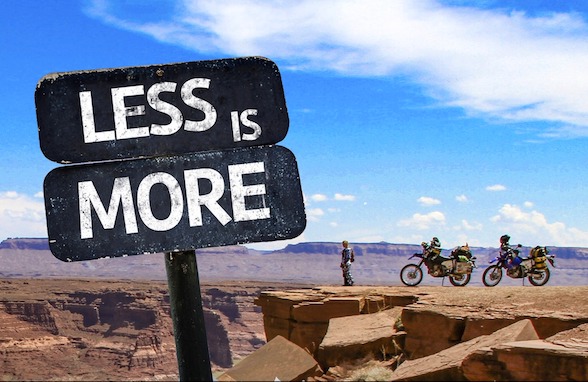
Having more has never brought me happiness. Contributing to others has given me all the joy and fulfillment I’ll ever need and that’s ultimately how you have more.

You can’t have more though unless you have time to make that contribution to others.

When someone or something tells you that you need more, ask yourself “What’s the worst that can happen if I do less instead?”

Using this pattern interrupt will stop you from unconsciously trying to accept more into your life. Less is always going to be better.


Almost everything is non-essential.

As you dig deep into essentialism and also personal development, you reach a point where you realize one thing:

“Almost everything is unimportant and doesn’t matter.”

This life-changing moment comes from the realization that we are all going to die and after we’re gone there’s not much that really matters other than our family and our legacy.

So, if nothing really matters, then why not do less so that you can spend time on what matters: your legacy.

When I figured out that almost everything was pointless, I became hyper-focused. It also stopped me from “The Fear Of Missing Out” because I’ve realized that I’m almost never missing out on anything at all.


What can I say no to?

This question is how you get back your priorities. Using the essentialist methodology, rate how you feel about a request for your time using 0-100. If your number is less than 90, then change it to zero and say no.

I’ve played around with this tool a bit and it’s been adapted from other strategies I’ve learned from many books on time and decision making (so I take zero credit).

Choosing brutal ways of saying no is how you force your brain to pick only what is essential. It also stops you from overthinking.

It’s similar to the idea made famous by Derek Sivers idea that teaches us to only say yes to requests that make you say “Hell Yes!” Any other reaction is a no.


This got my attention: using a reverse pilot.

I’d never heard of this idea before until recently. It’s essentially where you experiment with removing a task or habit for a week or so to see if there is any downside. I removed my habit of juicing recently after my naturopath told me to try it.

I used a reverse pilot and measured my energy levels without juice. It turns out the sugar spike I was getting from juicing was more of a problem than I thought.

Taking stuff away can often show you how unimportant something was in the beginning.


A new definition of wisdom: subtract things every day.

Yet another excellent idea from Greg McKeown. Wisdom is simply subtracting things from your life. It’s dead simple, profound and worth thinking about. What if having less, doing less, actually equal more? More of what you want that is.

What if doing less and embracing simplicity is crucial to success?

Have a play with essentialism. It’s certainly helped me.

If you want to increase your productivity and learn some more valuable life hacks, then join my private mailing list on timdenning.net


from
https://addicted2success.com/life/the-journey-of-essentialism-and-the-benefits/