Wednesday, 28 February 2018

5 Ways to Overcome Fear So You Can Live a Successful and Abundant Life

Fear is such an ugly critter isn’t it? We’re afraid of too many things: Spiders, heights, the dark and change. Oh how terrified we are of change. We talk about it and think about it but we rarely act on it. How often has this happened to you? You want to switch jobs or careers but you’re too afraid to move forward with that idea.

You want to move to a new area or a new town but you’re too afraid to take the leap. You want to go to the single’s bar but you’re too afraid to go alone.

I’m sure you’ve heard the quote “your life is on the other side of fear.” Read it again, let it sink in, and believe it because it’s true. Fear has taken up so much of your time and life already, or should I say, the existence you call life now. Although this may be a tad harsh, you know what I mean. You’re doing nothing more than flatlining right now because fear has stopped you from doing all the things you really want to do. One of abundance, joy, love, freedom and success.

I remember back in 2013 when I walked out of my relationship without two cents to my name, and fear had been a powerful force in preventing me from leaving. One day I realized that I couldn’t live that life of lies anymore and no matter what, I had to face fear and leave. It was absolutely terrifying for me but I had no choice. I was tired of just existing. Life had more to offer me, and I was denying myself of the wonders because of fear.

One year after that, I realize I was tired of my 25+ year  hairstyling career and wanted a freelancer life where I could work from anywhere in the world and inspire people along the way. I wanted more abundance, success and freedom. Once I faced my fear, I got all three and then some.

Do you struggle with ways to overcome fear and just end up stuck in its gripping hold? Here are 5 of my simple ways to overcome fear:

1. Take a big deep breath

Anxiety is usually the first emotion you will feel when fear rears its ugly head. Before you get all freaked out about what you are about to do, whatever leap that may be, take a big deep breath and calm your nerves. If you know you have to do something on a particular day and you are terrified about the event, try meditating first thing in the morning. A guided Chakra clearing meditation always works wonders for me. Afterwards, go knock ‘em dead!

2. Positive self talk

Instead of talking yourself out of the act, talk yourself into it. Remind yourself that you can do anything and you can handle whatever happens, good or bad. You must repeatedly affirm to yourself that you are brave, you got this and everything will turn out exactly the way it’s supposed to. Keep talking to yourself until you finally believe what you are saying. Trust me, you’ll get there.

“Our self-respect tracks our choices. Every time we act in harmony with our authentic self and our heart, we earn our respect. It is that simple. Every choice matters.” – Dan Coppersmith

3. Reward yourself

Who doesn’t love rewards? Tell yourself that once you complete this task, you will treat yourself to something awesome, even if it’s just a treat from Dairy Queen, as a reward for facing and overcoming this big fear. Is ice cream not your thing? Take yourself out for dinner or go buy those shoes you’ve had your eye on for the last 6 months. No matter what it is, pick something! When we know there is going to be a treat waiting for us at the end of something that is tough do it, we have more determination to make it happen.

4. Picture yourself

Happy and freaking out because you overcame a fear and you did it! Imagine yourself in the state of euphoria you will feel. Also, imagine the great things that are on their way to you because of what you just did. When you think of the thing that fears you most, also think of how you will feel after it’s over with!

“I always teach myself calm and visualization stuff.” – Conor McGregor

5. Great stories

You will have fantastic stories to tell once you overcome this fear. Let’s say one of your fears was to overhaul your entire life, change jobs, city, countries even, and then you finally flick fear away and do it. Imagine all the inspiring stories you will have to tell to others who maybe would love to do the same but are too afraid to do it. You can be the source of great inspiration for others.

When fear grips us and won’t let go, it’s just easier to stay there then to face it, conquer it and forge ahead but remember one very important thing: nothing changes if nothing changes. If you continuously let fear keep that hold on you, your life will never get better and you will never enjoy the abundance, success and freedom you deserve. Look fear straight in the eye today and declare “Not today Satan! Not today!

How do you overcome your fears? Let us know in the comments below!

Image courtesy of Twenty20.com


from
https://addicted2success.com/success-advice/5-ways-to-overcome-fear-so-you-can-live-a-successful-and-abundant-life/


Don’t Quit Your 9–5 Job – That’s What My Buddy Says.

The Internet has become full of digital nomads, the laptop lifestyle, entrepreneurs who sit on the beach and many false dreams that are portrayed as being better than working for someone else.

My buddy said this to me the other day:

“Don’t quit your 9-5!”

Five years ago, he quit his job in a bank and went out on his own with an online marketing agency.

-He sat on beaches with his laptop and did Skype calls from his villa.
-He took his girlfriend with him and put some travel photos up on Instagram.
-He did everything that the pre-roll videos of entrepreneurs on YouTube tell you will make you happy.

He was working for himself and incredibly unhappy with his career. He also went bankrupt and got $50k in debt.

The process he went through in his career led him to believe something he now teaches.


You don’t need to quit your 9-5 job.

My buddy believes that living the laptop lifestyle and working for yourself is fun for a little while, but eventually, if your work doesn’t align with your personal goals and doesn’t allow you to make an impact, you’ll eventually get lazy, or worse yet, give up.

So, what’s the solution then?

First, it’s an acknowledgment he says that not everyone has it in them to be an entrepreneur.

In fact, most people are not cut out to be entrepreneurs and that’s why 90% of businesses fail in the first five years.

There is another way though.

My buddy believes that if you understand the following, you won’t quit your 9-5 job:

1. You know how your job aligns with your personal goals
2. You know how your job makes an impact in the world
3. You know how you can use your job to discover your true self
4. You know who you are right now and who you have the potential to become
5. You know what entrepreneurship really means and whether you’re cut out for it


Why people are quitting their 9-5 jobs.

My buddy believes people are quitting their 9-5’s because they believe the grass is greener on the other side – and because they’ve never known what it’s like to be an entrepreneur, they feel it’s the only path to fulfillment and happiness.

If the culture of companies were to embrace this fundamental problem that is not being addressed, then fewer people would quit their jobs, start businesses that fail and be unfulfilled.


The solution, my buddy believes, is to show people that success can be achieved working for a company or working for yourself.

There is no one path. The number three employee at Facebook that’s now a millionaire is not complaining or feeling unsuccessful. He’s just as proud of his achievement as the founder of Tesla, Elon Musk.

“Using someone else’s company or your own company to be fulfilled and reach your goals, makes no difference”

Let me highlight this point a bit more. Four years ago, I wanted to build a personal development blog and create a tribe of millions of people. I realized that I hate building blogs, so I joined someone else’s blog (Addicted2Success) to achieve the same goal.

Addicted2Success gave me a platform and I now have my own following, vision and message that I share. When I started out though, I leveraged someone else’s blog.

There’s nothing wrong with this. What’s more important is that you feel you are making an impact and doing day-to-day activities that align with your personal goals. Avoiding this fundamental human need is what’s making people quit their 9-5 jobs. It’s unnecessary.

You don’t need to quit your 9-5 unless you are 100% sure you are cut out for entrepreneurship.

Try a side hustle together with working your 9-5 job if you must to try entrepreneurship for yourself. Whatever you do, don’t fall for the lie that you must quit your 9-5.

It could be the worst decision you ever make.

If you want to increase your productivity and learn some more valuable life hacks, then join my private mailing list on timdenning.net


from
https://addicted2success.com/entrepreneur-profile/dont-quit-your-9-5-job-thats-what-my-buddy-says/

Tuesday, 27 February 2018

5 Surprising Reasons You Should Write Every Day if You Want to Succeed

Ernest Hemingway and F. Scott Fitzgerald made writing look like a playboy’s game. Given to hard drinking and high living, they were famously careless and spendthrift. Fitzgerald squandered his fortune on the French Riviera, and Hemingway burned through the royalties from his Nobel-prize winning books paying for African safaris and fishing trips. By the end of his life, Hemingway had even acquired a large number of cats.

In many ways their fame has given their work a bad name. Their lives suggest that great writers and geniuses are spontaneous, impulsive and erratic—traits nearly the opposite of those sought in business leaders. Competent executives must be able to strategize and prioritize, understand markets and opportunities, adhere to budgets and acknowledge constraints.

First-class leaders are also known for their charisma, their ability to make solid decisions with incomplete information, and for their capacity to think on their feet. But developing a daily writing habit will sharpen your thinking and enhance your public speaking skills. It’ll make you more persuasive and more self-confident. You’ll find it easier to win arguments, motivate others, and drive results.

It’s a simple process: set aside 20 minutes every day for putting your thoughts into words. In time, you will watch yourself soar towards success in business as well as in life.

Here’s how writing each day can boost your leadership ability:

1. Writing builds your vocabulary

Writing helps build your vocabulary, making you more articulate in person as well as on paper.

Every time you write, you’ll be stretching yourself mentally as you reach for the right words. You might turn to Google or an old-fashioned thesaurus, or you might dig through your memories of reading and speaking, but each time you practice, you’ll be increasing the number and complexity of the words you know. You’ll also rev up your recall speed.

Not only will this make you a faster writer, but you’ll also become a smoother talker, and smooth talkers are persuasive leaders. Have an innovative insight you’d like to share? Want to take your elevator pitch to the next level? If you can find the best words, you’ll have taken the biggest step in convincing others that your ideas have value.

2. Writing hones your thinking

How often do you think about thinking? This process, called metacognition, helps you understand how your mind works as you form judgments, make decisions or conduct analyses. As you write, you’re practicing this special type of mental movement between impulse and action, between abstract thought patterns and the concrete form of words.

Every sentence has a logic, and so does every paragraph. When you write, you’re taking what inspires and excites you and crystallizing it into a logical format. As you re-read and revise what you’ve written, asking yourself if it’s clear and makes sense, you’ll be strengthening your logic even further.

Logic is your most powerful weapon in any argument, and your strongest ally in the battle to get your ideas heard.

“Writing is an exploration. You start from nothing and learn as you go.” – E. L. Doctorow

3. Writing boosts creativity

People often assume that highly creative people are born that way, and that their great ideas grow organically within them like apples on a tree. Nothing could be further from the truth. Edison couldn’t have perfected the incandescent light bulb if he hadn’t spent years tinkering in a lab, and Bell wouldn’t have patented the telephone if he hadn’t first experimented extensively with the telegraph.

Great ideas don’t come from nowhere, they’re the fruits of habit, the gems that come at the end of a solid idea-development process. Writing is quite simply the finest idea-development process known to humankind. Revision and review allow the very best of your ideas to shine through.

4. Writing increases your self-confidence and charisma

When you know what you’re talking about, other people can sense it. True self-confidence radiates from within, and it’s infectious. Leaders who believe in their own abilities and knowledge are the ones everyone will want to follow. And nothing develops that knowledge and self-confidence as well as practice. Rehearse your thinking by writing it down, and you’ll naturally become more sure of yourself.  

“Either write something worth reading or do something worth writing.” – Benjamin Franklin

5. Writing is a way to practice mindfulness

Today’s leaders are aware of the advantages to cultivating mindfulness on a daily basis—from decreasing stress to increasing listening skills and interpersonal effectiveness. We know that building these skills will help us grow. However, it remains difficult for many of us to fit daily meditation into our busy schedules.

Daily writing offers similar benefits. It allows you to slow down and take stock of your thoughts and feelings, to gain clarity about your impulses. It provides a comprehensive catalog of your state of mind—one that you can draw upon to orient yourself as well as to convince others.

Building a writing habit offers you one other big advantage: in time, you’ll end up with a big pile of words.

Words that you can turn into blog posts or articles, words that you can package and sell as a book. Releasing these words out into the world can transform you into a thought leader, or perhaps even a celebrated (and well-paid) author. Your words might even make you as famous as Dale Carnegie or dare I mention Fitzgerald and Hemingway.

Have you tried expressing yourself in writing? If so, is it simple or challenging for you? Let us know in the comments below!

Image courtesy of Twenty20.com


from
https://addicted2success.com/success-advice/5-surprising-reasons-you-should-write-every-day-if-you-want-to-succeed/

Advice From Jay Shetty That Will Help You Find Your Purpose in Life

Jay Shetty is a motivational speaker and lifestyle vlogger, who went viral with his “Changing the world begins with us” video, which received over 10 million views. He was nominated for the Forbes 30 under 30 Europe Class of 2017 and won third place in the Guardian Rising Star Award in 2015. He has worked […]

The post Advice From Jay Shetty That Will Help You Find Your Purpose in Life appeared first on MotivationGrid.


from
https://motivationgrid.com/jay-shetty-finding-your-purpose/

How I Write 3-4 Articles Per Week, Every Week.

Many of you are amazed at how much content I publish every month. I wanted to take you behind the scenes as once you understand my strategy, you won’t be that amazed and you’ll probably be able to do the same yourself (and get better results than me).

Before we continue, I’m not a professional writer. I’m an amateur.

This means if I can do it, so can you.

Here’s how I write 3-4 articles per week:


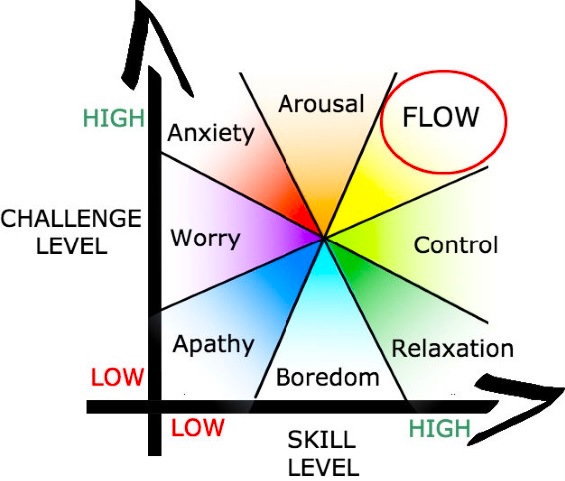
I get into flow.

There are many books on the subject and I’ve found flow to be highly beneficial. My process of flow looks like this:

1. Go to the gym and workout hard so endorphins are released and I’m relaxed
2. Do five minutes of meditation before I start
3. Drink a black tea or coffee before I start
4. Warm up on some inspiring videos on YouTube that give me goosebumps

Once I have done these four things, I’m usually able to get into flow really quickly.

Time seems to stand still. Outside noises seem to disappear. Thoughts seem to come to mind easily and join together in a logical order. Writing words of inspiration seems to become easier. My hungry stomach seems to stop bugging me.

“Flow has allowed me to write twice as much and have the process feel easy. What becomes easy, becomes repeatable”


I warm up on other things.

What do I mean? I don’t just write blog posts. I practice by:

– Writing replies to comments on LinkedIn
– Responding to readers emails
– Sending emails to clients
– Replying to messages from my friends via text
– Reading one book a month (on average)
Giving speeches at a Toastmasters club

Writing articles is not the only form of writing. There are lots of ways to prepare yourself for the sometimes-grueling task of writing 3-4 articles a week.


I use blogging as therapy.

The reason meditation has exploded? We’re more stressed, anxious and stuck in our heads than ever before. Journaling is okay but I prefer blogging. Blogging is the best therapy I know of.

It’s a great excuse to get your thoughts on paper instead of living a life of frustration because you didn’t deal with your emotional baggage.

Whenever you can chunk multiple benefits together in one task like writing articles, you get better results and additional motivation too.


Helping people gives you the motivation to keep going.

Speaking of motivation, writing 3-4 articles a week allows me to help others. By helping others, I get to go beyond myself which is what life is all about if you haven’t figured that out already.

When I open up those emails of gratitude because I’ve helped someone with something I’ve written, this fuels my motivation to keep writing. Helping others is addictive and that’s one of the ways I write 3-4 articles per week.


I take a holiday.

If you write 3-4 articles every week, for 52 weeks a year, you’ll burn out. I recommend two holidays a year of a fortnight each as a bare minimum.

What works for me is writing twice the amount of content for a few weeks leading up to my holiday, and then scheduling the publishing of the content for when I’m away.

This way, while I’m on holidays, my content keeps being published. I often find that once I return from holidays, the quality of my writing gets better because I’ve had time to synthesize my thoughts and get out of my own head.

This process makes my writing process cleaner and more productive. The vision I have for my blogging evolves slightly each time as well. I seem to be getting narrower with my focus and topics, and going much deeper.

Holidays create space that you can use to your advantage. Do. It.


I keep it simple.

Anything that becomes a complex process is challenging for most of us to keep doing – unless you are a rocket scientist and get your rocks off on that sort of thing. So, in order to write 3-4 articles a week I always do the following:

– Use Microsoft Word to write my articles
– Keep the formatting the same
– Use simple language
– Disconnect from the word count (number of words is not a badge for anything)
– Write on the same day every week (Saturday)


Now, a word on distractions.

Good luck trying to write 3-4 articles a week with notifications popping up on your computer and your phone next to you. You’ll never write sh*t.

The temptation of your phone has to be put to bed if you want output. What this looks like for me is to have my phone in another room. If it’s next to me, then procrastination takes over.


It’s so alluring to sit there and watch the little red notifications keep on coming through my different social media apps.

Kill this temptation and habit with a metaphorical knife through the heart.


I take a small break between each article.

All my articles are written in one single day being Saturday. Between each article, I take a very small break. This involves either a small healthy snack, another cup of black tea or reading a short Medium.com article for inspiration.


I write about what I love.

There was a time when I was doing interviews with entrepreneurs and then turning them into blog posts. I found the process exhausting and uninspiring. This made me quit and I haven’t done another entrepreneur interview since.

“I get asked all the time to write about different topics (often for someone else’s selfish benefit) and I always say no. The moment there is an agenda, I find it hard to write”

Sometimes I plan what I’m going to write and then I leave it to Saturday to decide what I feel like writing. Sometimes on Monday, I think that writing an article on fear would be cool. Then I get to Saturday and change my mind.

You have to write about what you’re enthusiastic about in the moment and this can often be based on your current circumstances or mood.


I edit later.

Never try and edit while you’re writing. You’ll never get your thoughts out of your head and into your writing software. You can perfect your writing later.

Everything you write feels great on the day you’ve written it but often when you go back later on, you see what can be removed from your work with a much clearer vision. I recommend using Grammarly if you are like me and are hopeless at grammar and spelling (p.s this is not some BS paid ad).


I send myself topic ideas during the week via email.

During the week, we all get moments of inspiration and ideas. This week I met the CEO of a billion-dollar property company who showed so much kindness that I was lost for words.

In short, he allowed homeless people to use the showers in his buildings because he felt it was the right thing to do.

When you get inspired like this, it’s great to send an email to yourself with a potential headline so you can write about it later if you feel like it. Many of my ideas come from day-to-day life and I email myself with potential headlines a lot.

Many of these headlines never get used – some do though, and they can often be the articles that go viral.

What’s funny is that because of this process, I probably get more emails from myself than is considered normal…LOL.
>>
<<

That’s everything I can think of right now to help you write 3-4 articles per week. If you follow at least some of this advice, I’m sure that you can duplicate some of my success (and probably more) if you put your head down and do the work.

Go out there and get inspired, and then write about it.

Best of luck writing.

If you want to increase your productivity and learn some more valuable life hacks, then join my private mailing list on timdenning.net


from
https://addicted2success.com/success-advice/how-i-write-3-4-articles-per-week-every-week/

Monday, 26 February 2018

5 Reasons Why You’re Not Getting Ahead in Life and Work

In the times when we periodically pause to take stock of our lives, it’s been my observation that many of us feel disappointed with where we stand in life and the progress we’ve made towards our goals. We are often unhappy with the direction we are moving into, or the stagnation we are in, and how our full-of-promises dreams when we were younger have crashed and burnt in a rather non-glorious way, buried under the triviality of the everydays.

We tend to complain and blame all kinds of external forces for this check-mate position we feel we are in—unfortunate circumstances, fate, luck, the misalignment of our stars. We also, paradoxically, tend to conveniently neglect to throw ourselves into the equation. That is, we don’t want to admit that we are the main protagonist in our life story and we have a huge influence over the direction which our lives take.

It’s understandable, because once we adopt the mind-shift that we can control more than we’ve let on ourselves to believe, then the onus is on us—we can’t be the passive spectators anymore. Our actions will determine our outcomes.

So, here are my main 5 obstructors, which may be still pulling us back, despite being fueled, from having the fulfilling personal and professional lives we want:

1. You lack confidence

Unfortunately, this is a big one. A plethora of research has demonstrated that knowing our value is a major determinant of how we progress in life, and how much respect we can command form others. What’s more, lack of confidence has financial penalties—it’s shown to result in lower income flows and loss of opportunities due to fear of failure. Simply, we aren’t taken with the necessary weight to be able to influence others to invest their resources and time in us.

Overconfidence, on the other hand, when practiced within reasonable proportions, can be quite the trampoline. Aside from helping to be considered as more competent, it also gives the perception of a higher status and power. So, a bit of an inflated ego (backed by skills and knowledge, of course) can do us lots of favors—personally and professionally.

“With confidence, you have won before you have started.” – Marcus Garvey

2. No quality network

Networking gets some bad aftertaste mainly because it requires extensive time and effort. It isn’t necessarily easy to engage in either, especially for someone who is more on the quiet side. But it’s a necessary evil. Everything in this world happens with and through other people. No way around it. Even more so, for those who are self- employed and don’t have the safety net of a steady salary stream.

Of course, not every conversation with someone we don’t know qualifies for networking. It has to be relevant and done right. We have to find commonalities and make a favourable impression. There’s lots of dynamics that goes far beyond the “elevator speech.” And other times, we don’t have to unabashedly promote ourselves to be noticed and taken seriously, we just have to do remarkable work.

3. You lack “Whatever-it-takes” mentality

Remember the analogy that success is an iceberg? No one sees all the blood, sweat and tears of those who have “made it” to the top, but the sacrifices are always there. There is no way around this either. It comes with the territory.

From all my years in finance, I’ve yet to meet a self-made influencer that hasn’t put in the long hours, the taking work home, the coming on the weekends when needed, the raising of their hand for more challenges. The reality is that the work-life balance many of us feverishly pursue can only take us this far.

To push yourself a bit extra means to be prepared to do all the things that are necessary to build your iceberg. Yes, it’s personally taxing on our mental and physical health, but the oh-so-sweet feeling of accomplishment is so worth it in the end!

4. The ability to talk, be opinionated and do a bit of mirroring

Many of us are now openly aware, thanks to Susan Cain’s wonderful book, that the world has been in favor of the gregarious ideal for quite a while now. Although social opinions may be slowly shifting, we are far from striking a balance.

But an introvert or extrovert personality matters merely in relation to how we handle interactions and re-charge. The skills to influence others and to market ourselves aren’t some optional “I-like-dislike” activities for either type, but requisites for getting noticed, and often getting ahead.

We are all in the sales business, even when we engage in “no-sales” selling”—the sooner we realize this, the faster we can craft strategies for “putting ourselves out there” in way that is comfortable to each one of us.

Finally, mirroring of others, or “behavioural matching,” is not a shameful undertaking, rather it’s often pleasing to the mirrored person (even if they don’t know that we imitate their actions), and for the person doing it—it’s a shortcut to learn winning behaviors, without the sometimes-costly trial-and-error experiences.

It’s based on a simple principle; we all like people that are similar to us in some way. Familiarity breeds comfort and likeability. Abundance of research shows that it’s highly beneficial when employed as a strategy to the ends of getting someone’s attention in a bar or a restaurant, to passing a job interview successfully, to closing a deal successfully.

“Happiness is an attitude. We either make ourselves miserable, or happy and strong. The amount of work is the same.” – Francesca Reigler

5. You do too much

At first blush, this sounds a bit counter-intuitive to everything I mentioned above, but if you get to think about it, it’s true. In our desire to reach the finish line as quickly as humanly possible, we strain ourselves to the point that we engage in too many undertakings at the same time, thinking that they will fast-track us to success.

Simply put, the problem is that we dilute our goal by doing too many things that are peripheral to our core aspiration. Having a strategy, of course—even a whole project plan—from the get-go is a tried-and-true way to circumvent redundant activities. Revisions may be needed, but too much straying outside the lines may be detrimental to our progress.

Prioritizing our work is of no less significance. But the best thing we can do to avoid needless work is to do less. Focus on the value each activity offers to the goal, master selectivity and simplify.

In the end, we all, naturally, want to see our endeavors pay off. No one likes to work for the sake of working—it’s always to achieve something greater, to create, to leave a legacy behind.

And while things as luck, talent, abilities, even our backgrounds matter to a point, certain personality traits, which we can largely nurture, and the decisions that we make, have the greatest say in our outcomes.

In its essence, it all comes down to the simple humane behavior of finding better ways to connect, communicate and materialize our thoughts and ideas into the world.

What could you be doing more of today to improve your life tomorrow? Comment below!

Image courtesy of Twenty20.com


from
https://addicted2success.com/success-advice/5-reasons-why-youre-not-getting-ahead-in-life-and-work/

The Power Of Mateship And Why The World Needs It.

I come from Australia, mate.

We say the word “mate” every three sentences and we’re big believers in the power of mateship. I think mateship goes beyond just Australia. I believe it’s an idea that has global significance.

The power of mateship only dawned on me recently.

I had a colleague at work who had been with the company 27 years and he was a mate. I also had a boss and mentor who inspired me and he was now a mate too. The three of us were surrounded by a broader team and we all considered ourselves mates.

Unfortunately, this A-Team has now been separated. Everyone has gone their separate ways. On the last day of the trio that started it all, I thought about what the secret sauce was to our success. Why we had changed an entire country and disrupted so many industries.

The answer to it all was this: MATESHIP.


We couldn’t do it alone.

By ourselves, we were average Joes with the occasional good idea. Together we were one and had this weird state of flow that could only be harnessed when we combined ourselves, our thoughts and our minds.

“Group flow became the foundation of everything we believed in and achieved over the last few years”

Each of us had our own superpower. My bosses were being autocratic and visionary.

My colleague David’s was coming up with crazy, out there ideas and selling the dream before we had any idea what was even possible. Mine was productivity and execution. The three of us shared another skill and that was the ability to build strong relationships.

Alone, these skills were useless; combined, these skills created a bond that became a powerhouse of success and mateship.


What is Mateship?

To me, it’s the sole reason I stayed in a job for three years rather than move around, seek more money or start my own business.

By making a real bond with a group of people, you end up coming to a point where you’ll do anything for them. If their mum dies, then you attend the funeral. If they have a baby, then you celebrate with them. If you have some nuts or dark chocolate, then you share it with your mates.

Mateship is the philosophy that what’s mine is yours.

Mateship is shared wisdom.
Mateship is group execution.

Mateship is shared consciousness and states of flow.
Mateship is where many people become one.


Mateship is how we solve difficult problems.

The world needs mateship because without it, we can’t solve difficult problems. Through mateship, we’re more likely to listen to each other and combine different points of view to solve hard problems.

The key to mateship is that you trust each other. Trust can allow us to do so much more – like build rockets that go to Mars.

“Many of us are trying to solve the same problems in isolation”

Imagine if we combined our skills and common interests through mateship and strived to achieve the impossible in our respective fields.

We could solve so many of the world’s most challenging problems such as poverty, diseases like aids and cancer, exploration of space, and uniting the different races rather than embracing war and violence as temporary band-aid solutions that lead to deep wounds later on.

My team at work have achieved so much not because we have Ph.D.’s, loads of cash, natural ability, high IQ or access to valuable resources: we’ve done what we’ve done because of mateship.


Mateship endures.

Even now that me and my mates have gone our separate ways, our mateship endures. We call each other still even though we’re in different companies. We still share ideas and contacts. We feed each other business. We feed each other spiritually. We sometimes even feed each other over a great bottle of wine.

Before it all came to an end, as mates, we decided to cement our mateship. We agreed on one trip a year to a destination that we would all go to. No matter what, we knew that our mateship couldn’t be broken.

We will always be there for one another because we’ve figured out individually that “We” is more powerful than “I.”


And finally, “The Mateship Code.”

Mateship only works if you worship the following:

1. You must trust each other
2. You must be able to take the p*ss out of each other
3. You must collaborate
4. You must be okay with challenging and even arguing with each other
5. And, you must respect each other no matter what
Now go use the power of mateship to solve an interesting problem and have fun at the same time.

The world needs more mateship.

If you want to increase your productivity and learn some more valuable life hacks, then join my private mailing list on timdenning.net


from
https://addicted2success.com/life/the-power-of-mateship-and-why-the-world-needs-it/